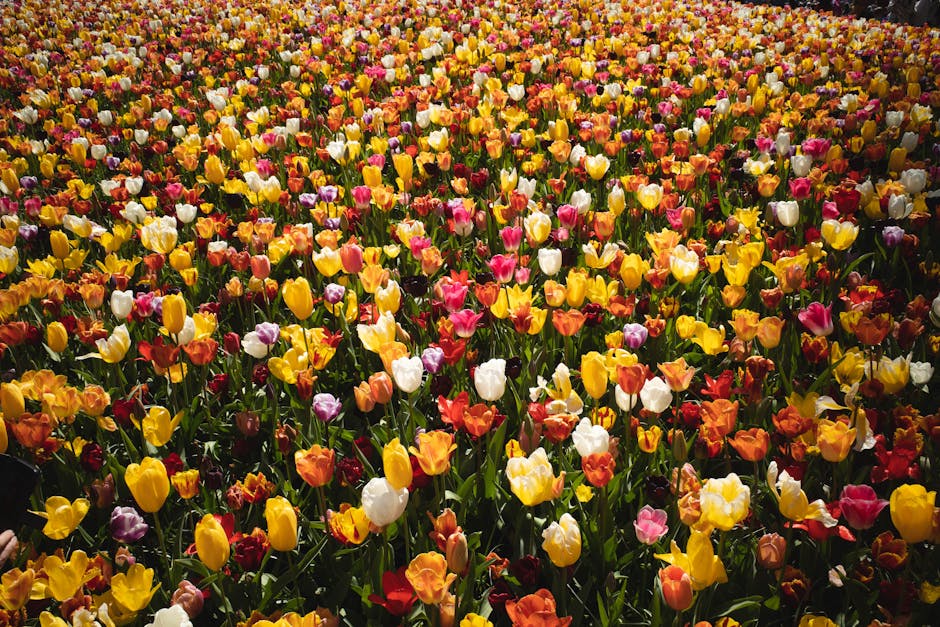
Keukenhof is the largest flower garden in Europe: 79 acres outside Lisse, an hour by train from Amsterdam, open for eight weeks each year from roughly late March to mid-May. Seven million bulbs planted by hand every autumn. An estimated 1.5 million visitors in a typical season. If you go on a warm Saturday you will stand in line for a bathroom for twenty minutes and wonder why you came.
If you read Keukenhof properly — which pavilions to go to, which to skip, when in the season to arrive, how to enter the grounds — it is one of the best one-day botanical experiences in the world. Here is that reading.
When to go
Keukenhof opens late March and closes mid-May. Not all of that window is equal.
- Late March to early April: mostly crocus, grape hyacinth, early daffodils. Tulips are still mostly closed buds. Good if you don't care much about tulips but want to see daffodil displays. Lightly attended.
- Mid- to late April: peak tulips. The reason everyone else is there. Also when 70% of total-season visitors show up. The outdoor fields around Lisse (the surrounding agricultural fields, not Keukenhof itself) are at their most spectacular.
- First week of May: peak late tulips (parrot varieties, fringed types, double varieties), plus peonies starting, plus the outdoor fields in their last week. Less crowded than late April. My recommendation.
- Second week of May onward: winding down. Many tulip displays already lifted. You'll see a lot of emptier beds.
Aim for a weekday. Arrive at opening (8am) or late afternoon (after 3pm). The 11am–2pm window is when you will curse the universe.
The four pavilions
Keukenhof has four indoor pavilions, each housing a different themed exhibition. Names change slightly year to year but the functions are stable. Here they are ranked.
Willem-Alexander Pavilion — go first
The largest of the four. Houses the main tulip exhibition — hundreds of varieties displayed on elevated beds. This is the only pavilion where you'll see named cultivars side by side, which is where you actually learn what kinds of tulips exist beyond "pink" and "red."
Go here first, while you're fresh, ideally in the first hour of opening. The pavilion fills up fastest and the beds are harder to photograph once crowded.
Oranje Nassau Pavilion — worth the stop
Smaller. Houses a themed exhibition that rotates annually — one year it might be about the history of tulip cultivation, the next year a specific variety or region. The content is genuinely educational. If you have any curiosity about how bulbs are grown, this is the pavilion that answers it.
Don't skip it. But if you're short on time, spend twenty minutes here, not two hours.
Beatrix Pavilion — depends on timing
This pavilion hosts timed cut-flower shows — different in each week of the season. Early in the season it may be amaryllis or anthurium; mid-season it shifts to roses or orchids; late-season it may have alliums or lilies. The best show is usually in late April through first week of May (rose and orchid shows tend to land then).
Check the season schedule before you go. If the show that week is a flower you care about, it's worth 30 minutes. If not, skip and spend the time outside.
Juliana Pavilion — the one to skip
Smallest and least curated. Usually hosts a children's educational section, a gift shop, a café. If you have children, fine; otherwise you can happily skip the whole thing and spend your time in the outdoor gardens.
What to see outdoors
The outdoor gardens are the real Keukenhof. The pavilions are context. Aim to spend 60% of your visit outdoors.
- The main pond and windmill — the iconic photograph. Arrive early (before 10am) or accept that your photo will have 40 strangers in it.
- The English garden section — smaller, walled, quieter. Most visitors skip it. Peonies (when in season), ornamental grasses, species tulips.
- The Historic Garden — displays older-variety bulbs that would have been grown in the 16th–19th centuries. Nerdy and wonderful.
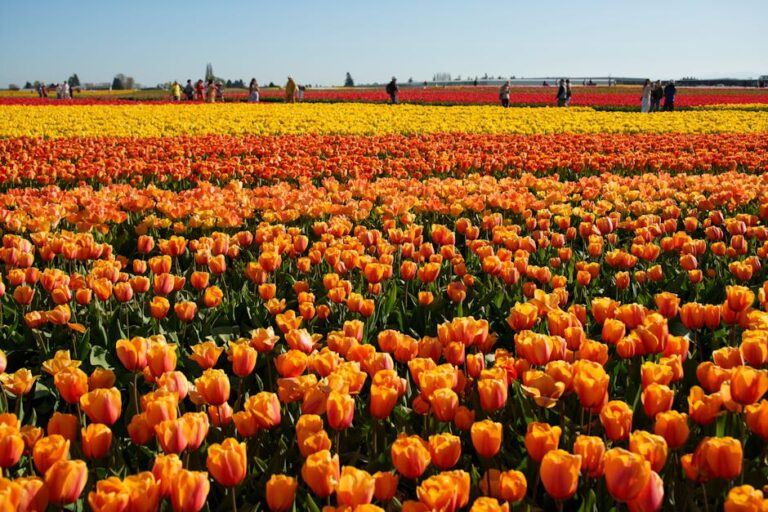
- The outdoor fields beyond Keukenhof itself — the agricultural tulip fields you can see from the perimeter. You cannot walk into these, but you can ride the edge via the Flower Bike Route (see below). This is where the real tulip experience happens.
The tulip fields, via bike
Rent a bike at the Keukenhof bike rental (or from Lisse town if arriving by train before entering Keukenhof). There is a signed Flower Bike Route — roughly 25 km — that circles the main bulb fields around Lisse and Hillegom. You'll see more tulips in a three-hour ride than in the whole of Keukenhof.
The fields are private agricultural land. Do not walk into them. You can pull the bike to the side of the road, step off, photograph across the field boundary. Stepping into a field is illegal and actively ruins someone's business.
How to get there without the bus tour
The Amsterdam-based bus tours are slow and expensive. Do this instead:
- Train from Amsterdam Centraal to Schiphol or Leiden (15–20 min).
- Bus 858 ("Keukenhof Express") from Schiphol, or bus 854 from Leiden. Both land at Keukenhof's main entrance. About 25 minutes.
- Combo ticket (train + bus + entry) at the train station kiosk. Cheaper than booking separately.
Total door-to-door from central Amsterdam: 90 minutes. You can do Keukenhof as a day trip without staying in Lisse.
What to pack
- Water. The on-site cafés get overrun at lunch.
- A real camera, not just phone. The distances across the gardens reward a zoom lens.
- A small picnic lunch — there are benches throughout the grounds, eating outside is permitted, and it's better than queueing for an average sandwich.
- Good walking shoes. You'll do 8–12 km of walking without realising it.
- Layers. Dutch April weather swings from 8°C to 18°C within a single day.
The short version
Go first week of May on a weekday, arrive at 8am. Willem-Alexander pavilion first, Oranje Nassau second, skip Juliana, check Beatrix schedule. Spend most of your day outside. Rent a bike for two hours to see the real fields. Take the train, not the tour bus. Pack a lunch. Leave by 3pm.
Write the first note
Thoughtful disagreement welcomed. Promotional links quietly trimmed.