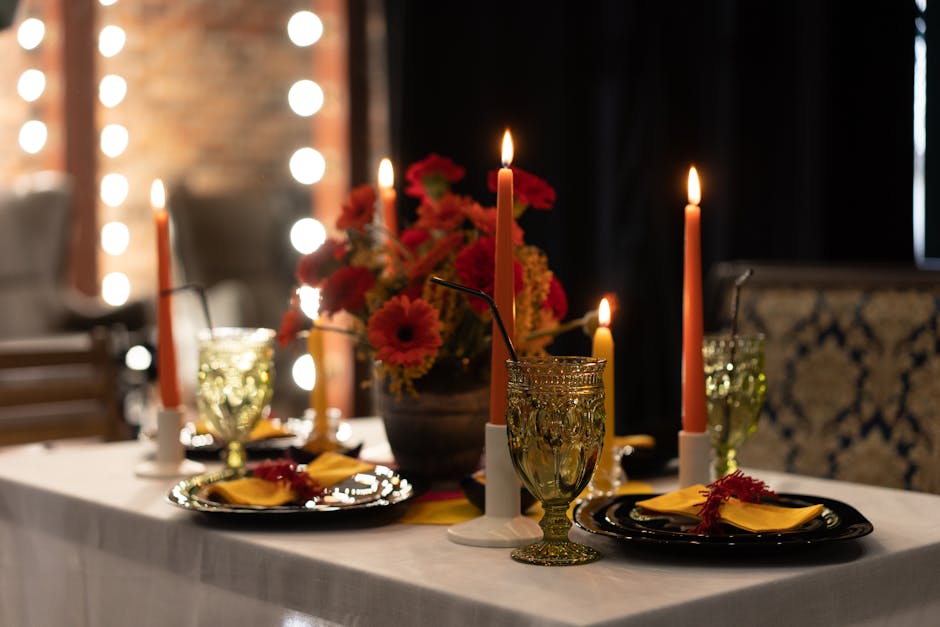
An October dinner has one structural problem: the sun sets before the guests arrive. If dinner is at 7, the garden is already dark at 6:30. The instinct is to compensate by over-lighting — more candles, more lanterns, more electric fixtures. The better instinct is to lean into the dark. A harvest supper, well done, is the single warmest, loveliest dinner of the year, precisely because the light goes first.
The lighting problem (solved)
The sun is gone by 5:30 in mid-October in most temperate latitudes. A harvest supper starts inside the house. This is different from a solstice supper (which starts in the garden); an October dinner begins in the kitchen or the dining room, with the candles already lit before anybody arrives.
The lighting plan
- Extra candles on the table. A summer table wants 4 tapers; an October table wants 6. Space them 40 cm apart so the whole length is lit.
- Lanterns on the path. If guests are walking up from the garden or a driveway, put a lantern every 3 metres along the path. Glass hurricanes, battery LED, whatever survives a light October drizzle.
- Warm bulbs in the porch and hallway. Any guest arriving is walking from their car through dark into lit interior space. The transition from cold-outside to warm-inside should be dramatic — they should feel like they've entered a warm room when they cross the threshold.
- Fairy lights in the greenery. If there's a mantel or a sideboard, weave small warm-white fairy lights through the foliage of the centerpiece. Battery-operated, low wattage. The effect should be candle-adjacent, not Christmas-adjacent.
What to avoid
Overhead pendant light on a dimmer is not enough. Modern LED pendants, even dimmed, cast a single cold pool of light from above. Turn them off entirely. Work with candles and fairy lights only.
What the garden is giving you
By October, the flower garden has thinned but the plants still standing are at their most dramatic. Build the centerpiece around:
- Last dahlias. Late-season dahlias in deep reds, burgundies, and almost-black tones. Spiraled dahlia cultivars ('Black Narcissus', 'Chat Noir', 'Arabian Night') are perfect for an October table. Cut long and tall.
- Copper-toned foliage. Copper beech, smokebush turning red, any shrub whose leaves are turning. These are the anchor — the soft, structural material that the dahlias rise out of.
- Ornamental kale. Yes, kale. The frilly rosettes of 'Redbor' or 'Nagoya Rose' are technically vegetables but serve beautifully as foliage at the base of an autumn arrangement. Long-lasting in water (2+ weeks).
- Sprigs of late rosemary or thyme. Woody, textured, scented. They warm the whole room when the candles heat up.
- A single branch of rosehips or crabapple. For height and for the small bright spot of colour above the dark dahlias.
This is a very different palette from June. It reads as burnt sienna and wine. Embrace the seasonal shift.
A menu that warms
The food for an October supper should do what candles do — warm you from the inside. Nothing cold, nothing raw.
First course: roasted squash soup with sage
Roast a butternut or kabocha squash in the morning (skin on, cut in half, seeds out, 200°C for 45 minutes, drizzle of olive oil). Scoop flesh into a pot with stock, a sweated onion, and a few sage leaves. Blend. Season. Serve warm with a drizzle of brown butter (brown it separately in a small pan) and a few fried sage leaves on top.
Portion modest — roasted squash soup is richer than it looks. A small bowl per guest. Save appetite for the main.
Main course: pot-roast beef with cider and apples
A shoulder of beef (brisket or chuck), 2.5–3 kg for eight people. Season generously. Sear on all sides. Put into a heavy lidded pot with one large onion (quartered), 6–8 cooking apples (halved, not peeled), a bottle of dry cider, a sprig of thyme, a bay leaf. Cook at 160°C for 3½ to 4 hours, covered.
Serve with buttered kale (yes, more kale), crushed potatoes, and a spoon of good mustard on the plate.
Dessert: apple galette
A rustic free-form tart. Rough pastry, peeled and sliced apples (a mix: one Braeburn or Bramley, one Pink Lady, one Russet), a little sugar, a pat of butter, a pinch of cinnamon. Pile in the centre of the pastry, fold the edges up roughly. Bake at 200°C for 35 minutes.
Serve warm, with cream or crème fraîche. Don't over-complicate — a galette is better than a tarte tatin in October because it reads as someone's kitchen, not someone's pâtisserie.
One last detail: the serving temperature
October food should go from kitchen to table at very warm, not merely hot. The room is cooler than summer; food cools faster on the plate. Pre-warm serving platters (low oven, 80°C, for 15 minutes before service). Warm the bowls for the soup. The contrast between warm food and cool room is part of the pleasure of autumn.
Wine
Autumn wines are red and generous. For the soup: a glass of dry medium-bodied white if you want one (Chenin from the Loire, an aged Riesling). For the beef: a real Burgundy or a northern Rhône syrah. For dessert: a small glass of calvados, poured warm. No dessert wine; the galette is already sweet.
After dinner
This is the dinner where after-dinner matters. Don't clear the table immediately. Leave the candles burning. Put on a slow conversation — not music, not a game. Maybe a small plate of walnuts and a wedge of aged hard cheese. People stay until 10:30, 11pm. The later the better.
The whole reason October suppers work is that nobody wants to leave the warm room for the cold dark outside.
The short version
Extra candles, lanterns on the path, warm bulbs in the hallway. Centerpiece: dark dahlias, copper foliage, ornamental kale, rosehips. Menu: roasted squash soup, pot-roast beef with cider and apples, rustic apple galette. Pre-warm every plate. Don't clear fast. Stay at the table until the candles are short.
Write the first note
Thoughtful disagreement welcomed. Promotional links quietly trimmed.