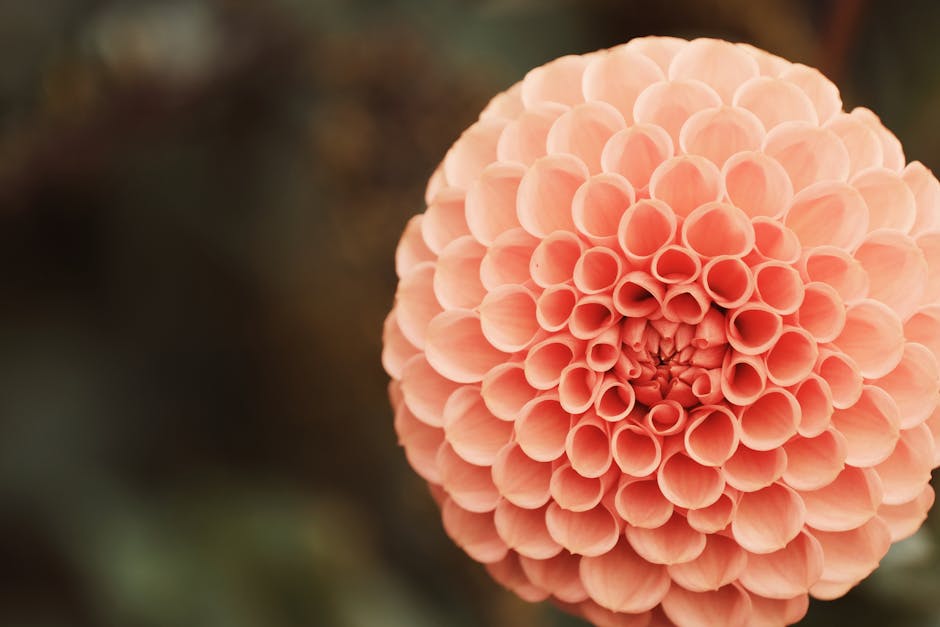
Peonies get the press. Dahlias do the work. From late July through the first serious frost (often early November in temperate gardens), a well-chosen dahlia bed provides the cut flowers for every dinner, every gift bouquet, every spare brown-glass bottle on a hallway table. If you grow only one thing for cut flowers in your garden, grow dahlias — and grow the four varieties below.
What makes dahlias the workhorse
Three things:
- They cut and come again. A dahlia bush, deadheaded regularly, produces new blooms all season. Cut a dahlia today; in 10 days, new blooms are opening where you cut. The more you cut, the more it produces.
- They last in the vase. A cut dahlia, with water changed every two days, stays beautiful for 5–7 days. Peonies last 3–4. Roses 4–5.
- They span a range of looks. From delicate single-petalled blooms that read as "wildflower" to massive dinnerplate varieties that look architectural, dahlias fit nearly every arrangement style.
The four varieties to grow
If you're starting a cut-flower dahlia bed from scratch, start with these four. Each does a different job.
'Café au Lait'
A creamy, blush-buff dinnerplate dahlia. Large heads (up to 25 cm across in good conditions), layered ruffled petals, blushing slightly pink at the centre and fading to almost-white at the edges. It is the dahlia that launched a thousand wedding bouquets, for good reason.
One Café au Lait in a vase is enough. You don't need to arrange around it — the bloom itself is the arrangement. Add a sprig of foliage, one smaller supporting bloom, and stop there.
'Black Narcissus' or 'Arabian Night'
Deep, almost-black red. Double or semi-double flower form. Medium-sized head (8–12 cm). These are the dahlias for autumn tables — the palette is wine-and-velvet rather than garden-party-pink.
Cut with long stems. Goes beautifully with copper-toned foliage, fruiting ivy, or a single white flower for contrast.
'Bishop of Llandaff'
A single-petalled red dahlia with dark, almost-black foliage. Small head (6–8 cm), open-faced like a wild flower, with a clear yellow centre. The reason to grow this one is the foliage — the dark leaves make the whole plant architectural, and the leaves themselves cut beautifully as foliage in any arrangement.
A few Bishops in a tall vase on their own look wonderfully like a cottage garden gathered at the last minute.
'Karma Choc' or similar spiky cactus variety
For textural interest. Cactus dahlias have narrow, rolled, spiky petals rather than the round ruffled petals of dinnerplate or ball varieties. They look almost like starbursts in the vase. Medium to large head.
One cactus variety in an arrangement alongside a ball variety creates visual contrast that's hard to achieve with roses and peonies alone.
When to cut
Early morning. Before the heat of the day. 7am to 9am is ideal; any later and the stems have started to lose turgor.
Cut only fully-open blooms — unlike roses, which open in the vase, a dahlia cut in bud will not open fully indoors. It will sit as a half-opened ball and never finish. Watch the bloom over several mornings; cut when all the petals have fully unfurled and the centre is still tight (not yet showing pollen or starting to brown).
The cut itself
Diagonal cut, 45 degrees, with sharp shears. Cut the stem as long as possible (50+ cm) — you can always trim shorter later, never longer. Immediately put the cut stem in a bucket of cool water and leave in a dark room for at least 2 hours before arranging. This "conditioning" doubles the vase life.
How to arrange dahlias
Dahlias are top-heavy. They want wide-mouthed vessels that let the head sit lower than where the stem meets the rim — the weight of the head is supported by the rim, not balanced on the stem. A low ceramic urn, a wide-mouthed brass vessel, a squat Japanese pottery bowl.
Narrow trumpet vases do not work for dahlias. The head flops forward and the whole arrangement looks drunk.
Mixed arrangement rules
- Dahlia + one supporting bloom (rose or ranunculus) + foliage. Three elements total.
- Dahlia + fruiting branches — this is the secret combination. A dahlia with a spray of rosehips or small crabapples reads as hand-picked, seasonal, and deliberate all at once.
- Dahlia monoculture — five to seven blooms of the same variety in a single vessel. Works especially well for Café au Lait or any single-color variety where the ruffle is the whole point.
How to keep the plant producing
Deadhead aggressively. Any spent bloom left on the plant signals to the plant that it can start producing seed (its biological goal) and stop producing new flowers (your goal). Remove spent blooms every 2–3 days, cutting back to the next set of leaves.
Feed with a tomato fertiliser every 2 weeks once the plant starts blooming. Tomato feed is high in potassium, which pushes flower production. Avoid high-nitrogen feeds, which push leafy growth over flowers.
Stake early and firmly. A full-grown dahlia plant is top-heavy; a single summer storm can collapse an unstaked bush. Put a 1.5m bamboo stake behind each plant at planting time and tie the main stem loosely every 30 cm as it grows. Don't wait until the plant needs staking.
The end-of-season question
In climates where the ground freezes, dahlia tubers need to be lifted before the first hard frost, stored dry in a cool dark place over winter, and replanted in spring. In milder climates (where the ground never freezes solid), they can overwinter in place with a thick mulch.
If you're new to dahlias, assume you'll be lifting. It's less effort than it sounds — once a year, October, an hour.
The short version
Grow Café au Lait (the show-stopper), Black Narcissus or Arabian Night (the dark wine colours), Bishop of Llandaff (the architectural foliage), and a cactus variety (for texture). Cut at 7am, fully-open blooms, diagonal cut, condition in water for 2 hours. Arrange in wide-mouthed vessels. Deadhead every 2 days. Feed with tomato feed fortnightly. Stake early. Lift in October if you freeze.
Write the first note
Thoughtful disagreement welcomed. Promotional links quietly trimmed.