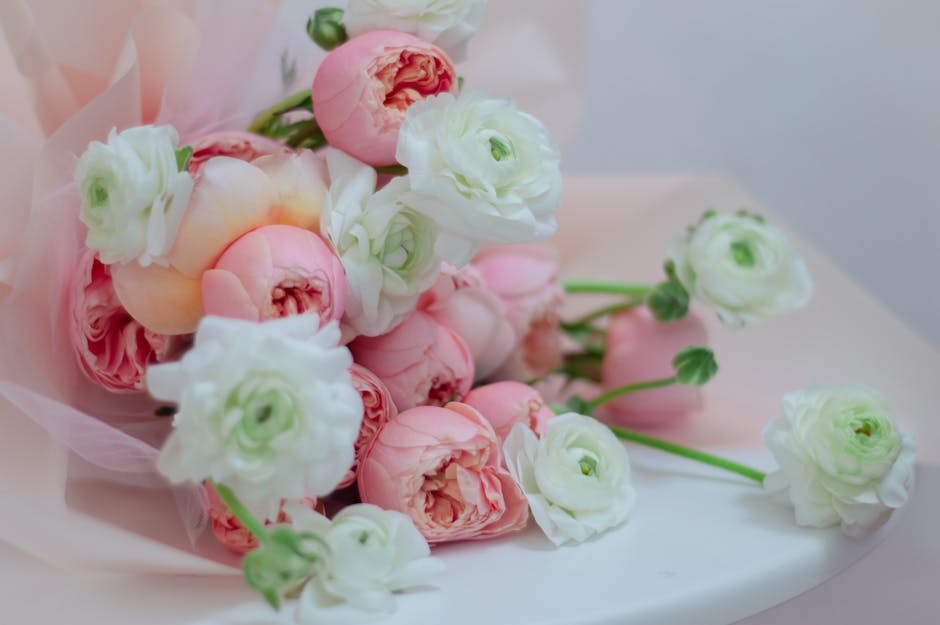
Every florist has private rules about what combines well and what doesn't. Some are stylistic (colour, form, texture), but the best are about biology — bloom overlap, scent compatibility, how two flowers behave in the same vase. Here are three trios I keep returning to, and two pairings I will not use.
The warm trinity: peony, garden rose, ranunculus
If I had to build an arrangement with exactly three flowers, this would be them. The reason is practical, not aesthetic.
They bloom at the same time
In a temperate garden, peonies run from mid-May through late June. Garden roses start in late May and run into September. Double-headed ranunculus arrive at florists' markets from March through June. There is a three-week window in late May to early June when all three are in peak season simultaneously. Using flowers at peak means they last twice as long in the vase as the same bloom out-of-season.
They have similar petal density
All three are multi-petalled, layered, slightly ruffled. When you put them together they read as one family rather than three competing species. A single daisy in this arrangement looks lost; a second peony and a third rose look like the same conversation.
Their colour families rhyme
Peonies in coral, blush, and deep-rose shades share palette with garden roses and ranunculus almost perfectly. Picture a bouquet with coral peonies, blush garden roses, terracotta ranunculus — no single flower dominates, nothing clashes, the whole thing reads warm without being pink.
How to build it
Equal weight is a trap. Aim for roughly 40% peony (the heaviest visual), 35% garden rose (the supporters), 25% ranunculus (the details). Peonies first, roses tucked into the gaps, ranunculus woven through as accent. Add two sprigs of soft foliage (sage grey, not glossy green) and a few stems of sweet pea for movement.
The quiet trinity: scabiosa, cosmos, cornflower
A second combination, very different in tone. Where the warm trinity is luxurious, this one is meadowy — airier, less formal, better for a breakfast table or a weekday lunch than a formal dinner.
Why they work
All three are what florists call "airy" — long thin stems with small flowers that float rather than cluster. Put them together and you get a bouquet that moves with the breeze. Put any one of them alone and it looks sparse.
Colour-wise
Blue cornflowers, pale-pink cosmos, deep plum scabiosa. Or invert it: white cornflowers, magenta cosmos, pale scabiosa. Three tones that share value (all mid-light, nothing too dark). The resulting arrangement looks like you walked through a meadow this morning, which is the point.
Vase
Small mouth, tall vase, so the airiness is preserved. A milk bottle, a brown apothecary jar, a squat wine-bottle-sized vase. Not a bowl — the stems fall over. Not a trumpet — the airy effect disappears.
The autumn trinity: dahlia, chrysanthemum, fruiting ivy
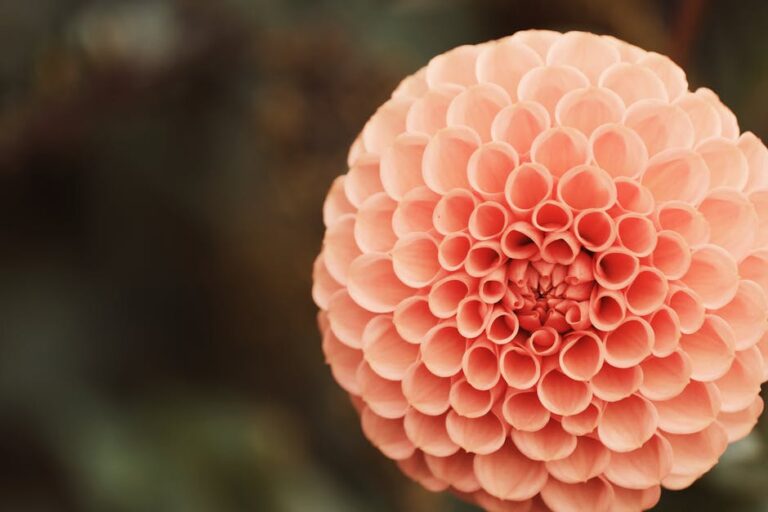
Late September into October, when the warm trinity has finished. Dahlias in spice tones (rust, copper, deep red, the ones that look dipped in wine), chrysanthemum in bronze (not the funeral-white supermarket kind — seek out cascade or Korean varieties from a good florist), and fruiting ivy with small black berries for texture.
Why it works
All three carry the same autumnal palette — orange-to-rust-to-burgundy — and their forms complement each other: dahlia as the structured round, chrysanthemum as the loose cluster, ivy as the trailing accent. Layer ivy low, chrysanthemum in the middle, dahlia standing proud.
Scent
Dahlia is faintly green-scented. Chrysanthemum smells herbal, almost peppery. Ivy adds a green woodiness. Together they read as walking through a garden in the morning, not as perfume.
Two pairings that never work
Now the shorter list.
Rose and lily
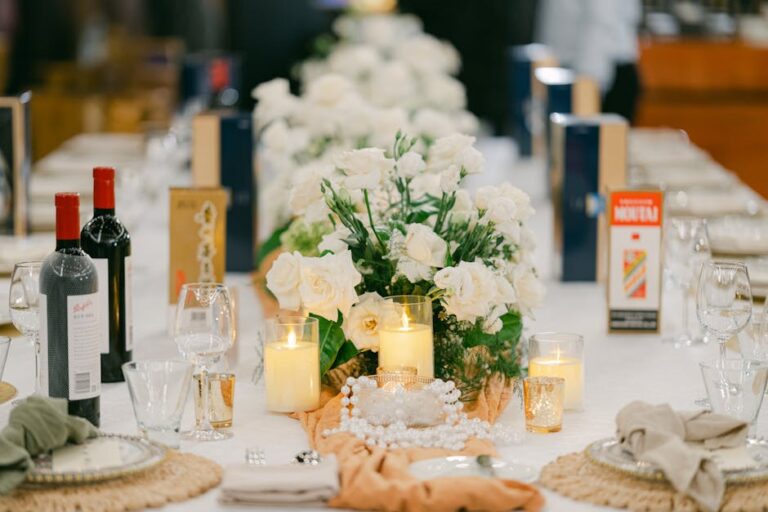
The scent fight. Roses produce a gentle, slightly sweet scent that layers well with food. Lilies produce a heavy, almost spicy-vanilla scent that overpowers food and layers badly with rose. Put them together in a dining-room vase and within twenty minutes the room smells of lily and nothing else.
There's also a practical issue: lily pollen stains, badly, on linen. A rose bouquet next to a white tablecloth is safe. A lily bouquet is not.
If you love lilies (a reasonable thing to love), arrange them on their own, in a hallway or an entrance — never a dining room — and remove the anthers with a tissue the moment they open to stop the pollen.
Peony and baby's breath
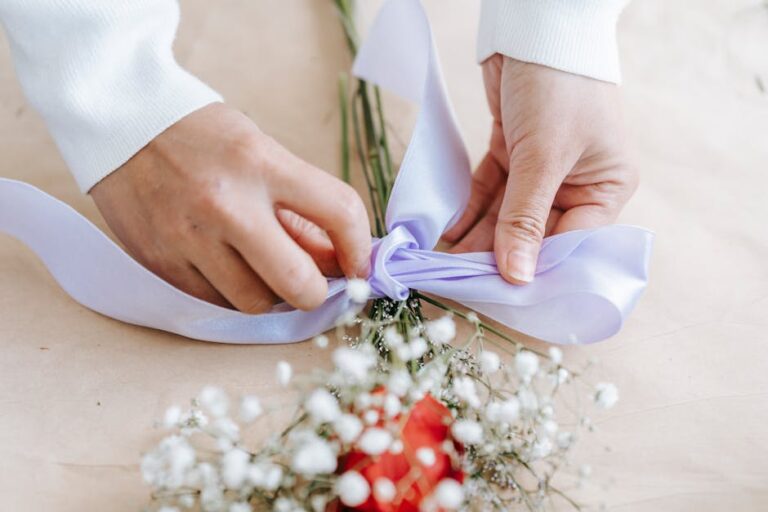
This combination has a memory of a specific era — late-1990s wedding flowers, when every bouquet had a cloud of gypsophila (baby's breath) and a handful of "statement" flowers struggling through it. It still reads as that era, and not in a quoted-knowingly way. The scale is wrong (baby's breath is tiny, peonies are huge, they don't speak to each other) and the mood is wrong (peonies are rich, baby's breath is bland).
If you want an airy foil for peonies, use instead: sweet peas, cosmos, astrantia, or nigella. All four give you airiness without the 1998 signal.
The short version
For warm and romantic: peony, garden rose, ranunculus. For airy and meadowy: scabiosa, cosmos, cornflower. For autumn depth: dahlia, chrysanthemum, fruiting ivy. For what to never do: rose with lily, peony with baby's breath. Everything else is up for negotiation.
Write the first note
Thoughtful disagreement welcomed. Promotional links quietly trimmed.