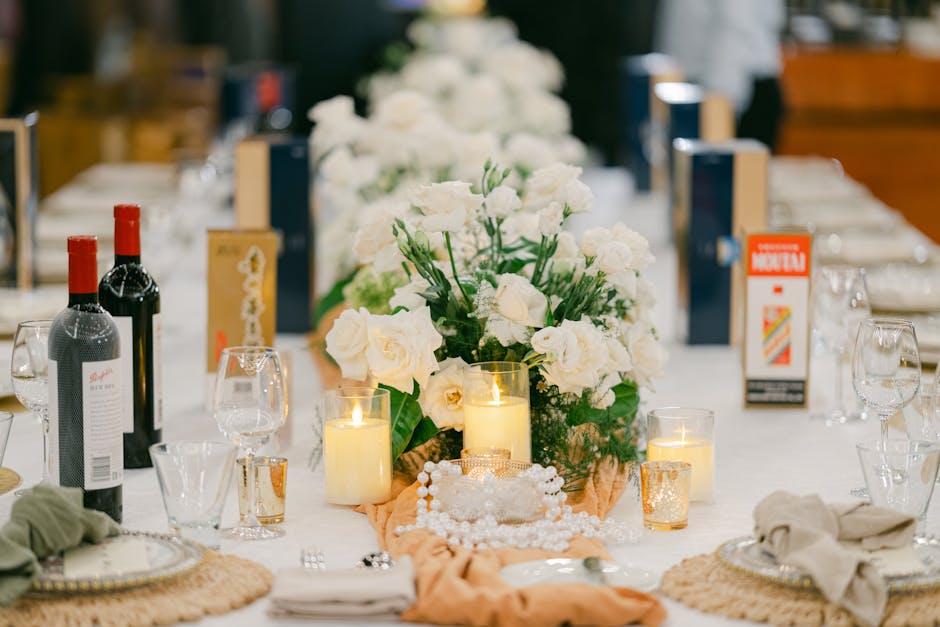
The first centerpiece anyone makes is too tall. This is understandable — flowers look tall in the florist's shop, and the impulse is to build something vertical and impressive. At a dinner table it is the wrong impulse. A tall centerpiece blocks the sightline between guests on opposite sides of the table, and blocked sightlines break conversation. Here is how to build a centerpiece that sits under eye level and does more work for being lower. Consider which blooms work best together, as three flowers that always look better are a great starting point for any arrangement.
The ten-inch rule
Nothing about the centerpiece — including the tallest bloom — should rise more than ten inches (25 cm) above the table surface. For most guests sitting at a dining table, the eye line is roughly fourteen inches above the table. Ten inches of centerpiece means conversation flows over the top. Twelve inches is borderline. Fourteen inches is a wall.
Measure before you build. Stand a chopstick at the centre of the table, mark it at the ten-inch height, and when your tallest stem reaches the mark you stop.
Width over height
What a low centerpiece loses in vertical drama it makes up in width. Instead of one tall vase, build a horizontal garland: a loose ring of blooms running the length of the table with candles nestled inside it.
For a two-metre table:
- One shallow brass bowl or trough at the centre, roughly 25 cm long, 12 cm wide, 6 cm deep.
- Two smaller posies in brown-glass bottles at either end of the bowl, about 40 cm out.
- Three tapers spaced between them.
The whole thing reads as a single floral gesture running down the centre of the table, not as three competing arrangements. You get a long garland without any part of it breaking the ten-inch rule.
The flower frog is your friend
A flower frog — the spiky metal disc that sits in the base of a vase and holds stems in place — is the single best tool for low arrangements. It lets you build horizontally without the arrangement collapsing into a pile.
How to use one
- Put the frog in the bottom of the shallow bowl. Stick it down with floral putty if it slides.
- Fill the bowl with water just above the top of the frog's pins.
- Start with horizontal stems — foliage, vine, anything that will spread outward from the bowl. Push the cut end of the stem into the pins. These stems should extend off the edge of the bowl, even hanging below the rim. This is the "garland" base.
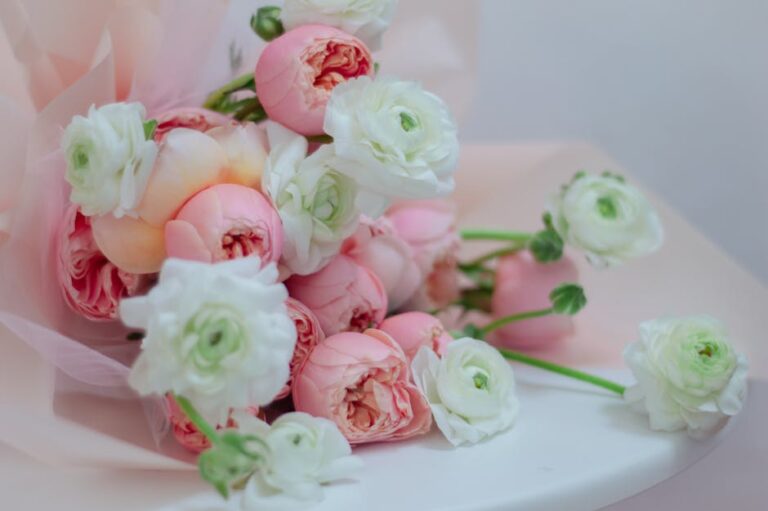
- Layer in medium-height stems at 45-degree angles: roses, garden roses, double ranunculus. These form the body of the arrangement.
- Add your tallest stems last, straight up or slightly forward. Keep these under 10 inches measured from the table surface (remember the bowl is 6 cm already, so your tallest stem from bowl rim is 19 cm).
- Tuck in smaller blooms or berries or herb flowers as fillers between.
A note on foam
Floral foam (the green brick kind) does the same job and is easier for beginners. It is also an environmental disaster — it doesn't biodegrade and sheds microplastics. A flower frog is reusable forever and better. If you have to use foam, use the compostable kind (some brands now make it); otherwise, flower frog.
Candle placement within the garland
Tapers go between the floral clusters, not inside them. A taper set among live stems will burn them by dessert. Leave at least 8 cm of clear space around each candle base.
Height of the candle above the garland: the candle should rise about 15 cm above the tallest bloom (so roughly 25 cm above the table). This sounds like it breaks the ten-inch rule, and it does, but candles are narrow and translucent — they don't block a sightline the way a block of hydrangea does. A tall taper is a different visual category to a tall bloom.
Flower choice for low centerpieces
Some flowers are better for this layout than others.
Work beautifully
- Garden roses (any variety with a tight head): they hold their shape for days and their bloom faces outward, which works for a low garland where guests are looking at them from above.
- Ranunculus (especially the double-headed varieties): good for adding colour depth without adding height.
- Peonies: when they're in season (mid-May to late June in most temperate gardens), a single peony is worth five roses in a low garland.
- Sweet peas: light, scented, and they drape naturally rather than standing straight up.
- Scabiosa in its pincushion stage: works as a filler with texture.
Struggle
- Lilies: bloom head too large relative to a low garland; overpowering.
- Delphiniums, stocks, snapdragons: naturally vertical; trying to lay them horizontal looks awkward. Save these for tall arrangements.
- Baby's breath: too frothy at scale; reads as bulk rather than structure.
When to break the ten-inch rule
On long rectangular tables longer than 2.4 m, a purely horizontal centerpiece can start to feel flat. You can add two taller vertical arrangements at the ends of the table — floor-standing trumpet-shaped vases, each ~40 cm tall — to bookend the low centre garland. Guests at the main seating area still have clear sightlines across the middle; the taller pieces sit at the poles.
For a round table under 1.5 m: never break the rule. A round table with a tall centerpiece is a wall on all sides.
The short version
Ten inches max. Use a flower frog, not foam. Build wide, not tall. Candles between the flowers, not inside them. And always measure before you build — tall-creep is real, and by the time you step back to look, the rule is already broken.
Write the first note
Thoughtful disagreement welcomed. Promotional links quietly trimmed.