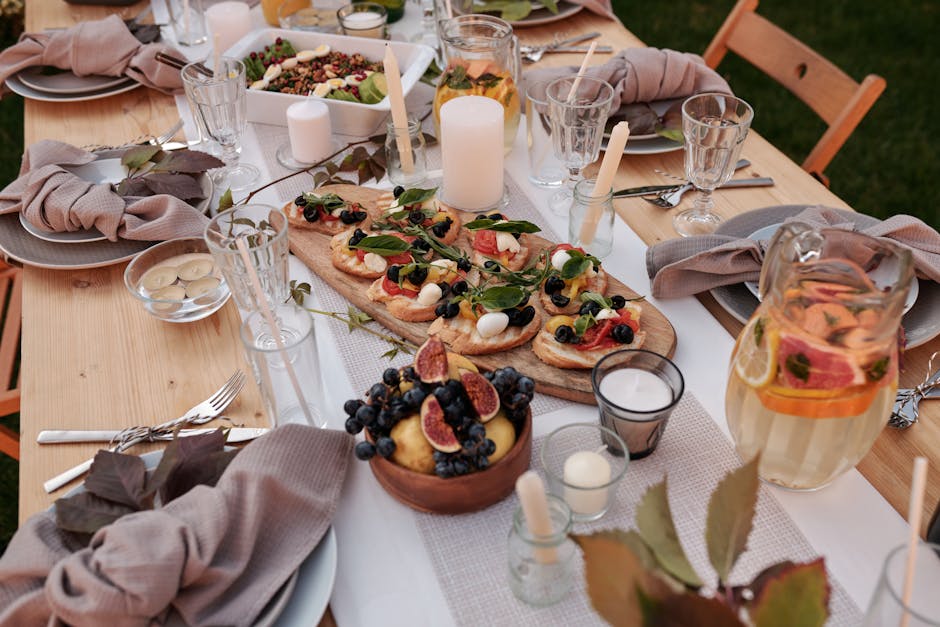
There is a half hour before any summer dinner where everything is still waiting. The linen is down, the candles are not yet lit, the first guest is stuck in traffic or doing that thing guests do where they leave the house and then come back for the wine. That half hour is the most useful you will have all evening, because it is the only time you will see the table before anyone eats on it. Here is how to use it.
The linen goes down first
Not a bleached cotton tablecloth. Not a printed paper runner. One long piece of natural-dyed linen, oats-and-milk color, deliberately wider than you need. Let the ends fall off both short sides of the table by six to eight inches. A runner that stops flush at the edge of the table looks rented. A linen that spills looks loved.
If the table is outdoor wood and already has a character of its own, leave strips of bare wood visible on either long side. The runner is a road down the middle, not a tablecloth.
If it is a round table, skip the runner and put a small square of linen under the centerpiece only. Round tables want to breathe.
Then the candles, and the candles have rules
Beeswax tapers in brass, every time. Here is why:
- Beeswax softens the light about three degrees warmer than paraffin, which matters for skin tone in photos and, honestly, for skin tone in real life too.
- Beeswax has a faint honey scent as it burns, which layers under the flower scent and does not compete with dinner smells.
- Brass catches the flame and multiplies it. Silver is too cold for a summer garden; pewter is too flat.
Buy the tapers at least 10 inches tall. Anything shorter and they burn down inside the first course. Light them half an hour before guests arrive so the wax catches at the base and the candles start to weep down the brass. That weeping is the thing. A freshly-lit candle looks like a rental prop. A candle that has been burning for thirty minutes looks like dinner.
If you are outdoors
Clip a glass hurricane around each taper. The formula is brass + glass + linen. Anything else is a nice table but not a set.
Finally, the flowers — three posies, not one arrangement
This is the rule most people get wrong. A single dramatic centerpiece blocks the conversation. You cannot see the person across from you, and the flowers become a wall down the middle of the table.
Instead: three small posies, spaced along the length of the table at roughly eye-level when a guest is seated. Each posy in a small clear-glass or brown-glass container (brown glass if you have it — old medicine bottles are perfect). Each posy under eight inches tall.
The rule on what to put in them:
- Only what was in the garden or the market that week. Not imported flowers, not ordered-for-delivery. The point of a summer garden table is that it reflects summer.
- Three to five stems per posy, no more. Five stems looks abundant. Seven stems looks arranged.
- One statement bloom, two supporters, one sprig of greenery. For June in a temperate garden: a peony, two garden roses, a sprig of mint. For late July: a cosmos, two snapdragons, a sprig of fennel flower.
When the peonies are finished
Which they will be, around the third week of June. Switch to double ranunculus (they look like miniature peonies and are in season longer) or garden roses with tight heads (David Austin varieties are closest to peony-shape). By August, switch to dahlias. The whole summer should move through three generations of bloom this way.
Now: the half hour
Once the linen is down, the candles are lit, and the posies are sitting where they belong, step back. Take off your apron. Pour yourself half a glass of wine (half, because the first guest arriving and finding you holding a full glass is an awkward thing). Walk to the far end of the table and look at it from where a guest will look at it.
Check for three things:
- Sight lines. Can you see all the way down the table? If a candelabra is taller than a posy is tall, they need to trade places, or the candelabra needs a shorter candle.
- Balance. Are the three posies evenly spaced? (Not mathematically perfect — just roughly.) Does anything look marooned?
- The linen. Has it bunched anywhere? Smooth it. It will bunch again during dinner; that is fine. It should not start bunched.
What to skip
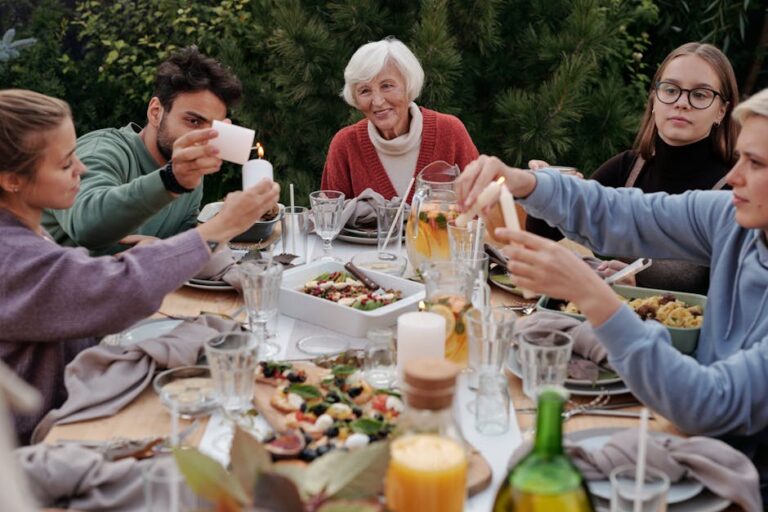
No name cards for a dinner under ten. People will sort themselves out and will remember who they sat next to. Place cards are for tables of twelve or more.
No printed menu. Tell them what they are eating when the food arrives.
No themed tablescape. No pumpkin if it is June, no shamrock if it is March. A summer garden table is already themed: it is summer, and there is a garden, and you are at a table. That is enough.
The last thing to do
Check the time. Put a pitcher of cold water on the table (not iced — iced water makes a pool of condensation on the linen). Stand back one more time. You are done. Wait for the first knock.
That half hour was the best part of your evening.
Write the first note
Thoughtful disagreement welcomed. Promotional links quietly trimmed.